D major only uses four strings, which makes it the easiest open shape to hear a single finger move clearly against the others. This post works through the same set of variations as the A-shape post, applied to D. Each diagram shows the fingering on the left and the intervals that fingering spells on the right.
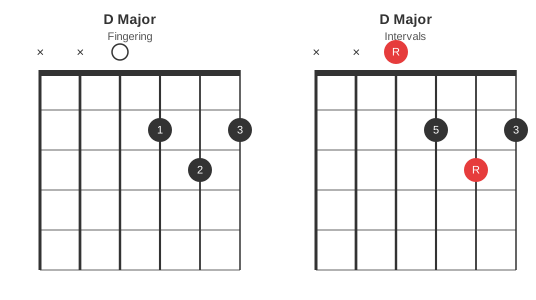
Base shape: D major
The D shape splits its work neatly across two strings. The top E string carries the third, so every suspension and the minor happen there. The B string carries a doubled root, so every seventh, the sixth and the add9 happen there instead.
Suspended: sus2 and sus4
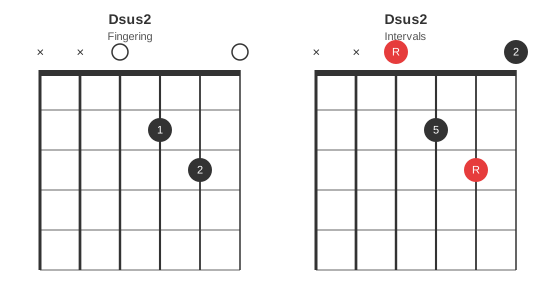
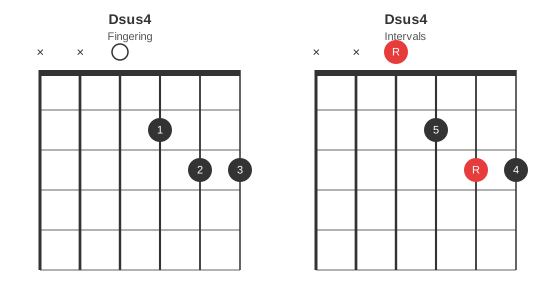
Both suspensions move the top string alone, the string carrying the third in the base shape. Lift the ring finger and the open E gives the second; slide that same finger up one fret instead and G gives the fourth.
Minor and minor seventh
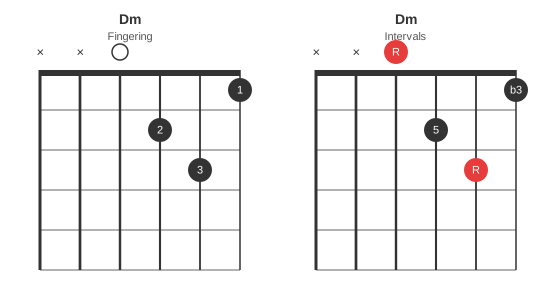
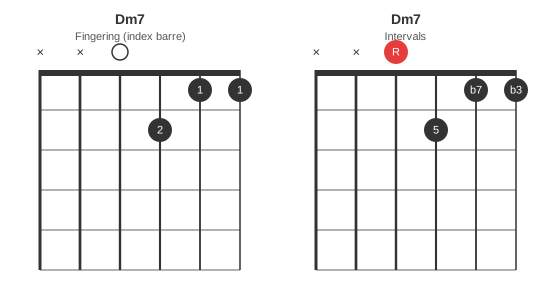
Dm takes that same top string down one fret to F, the minor third. Dm7 then moves the B string doubled root down two frets to C, the flat seventh, which puts both fretted notes on the first fret under a single index finger.
Dominant seventh and major seventh
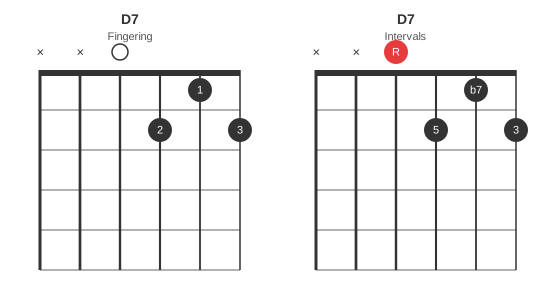
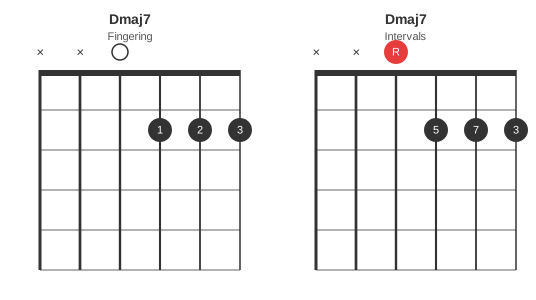
D7 makes the same B string move against the major third: doubled root down to C, the flat seventh. It is the shape most players learn first for a dominant chord, useful as the V in a blues in G (see the 12-bar blues post). Dmaj7 stops one fret higher at C#, a half step below the root.
Sixth and add9
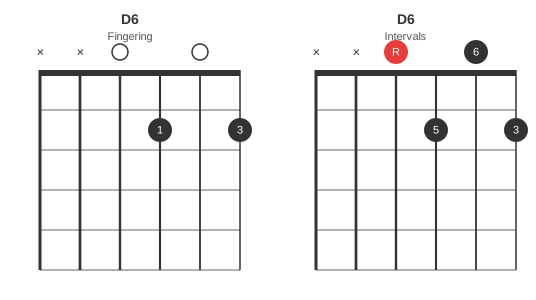
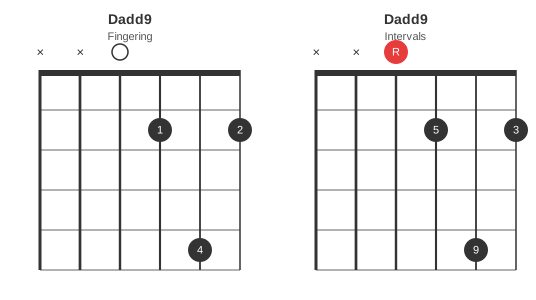
D6 opens the B string, so the doubled root becomes the sixth and the third on the top string stays. Dadd9 moves that same B string the other way, from fret 3 to fret 5, turning the doubled root into the ninth. Both keep the third, which is what separates an add chord from a suspension.
Summary table
| Chord | Frets (low to high) | Change from D major |
|---|---|---|
| D | xx0232 | base shape |
| Dsus2 | xx0230 | top E: 3rd -> 2nd (open) |
| Dsus4 | xx0233 | top E: 3rd -> 4th |
| Dm | xx0231 | top E: 3rd -> b3 |
| Dm7 | xx0211 | Dm, plus B string: doubled root -> b7 |
| D7 | xx0212 | B string: doubled root -> b7 |
| Dmaj7 | xx0222 | B string: doubled root -> maj7 |
| D6 | xx0202 | B string: doubled root -> 6th (open) |
| Dadd9 | xx0252 | B string: doubled root -> 9th |
Next in the series: the E-shape open chord variations.