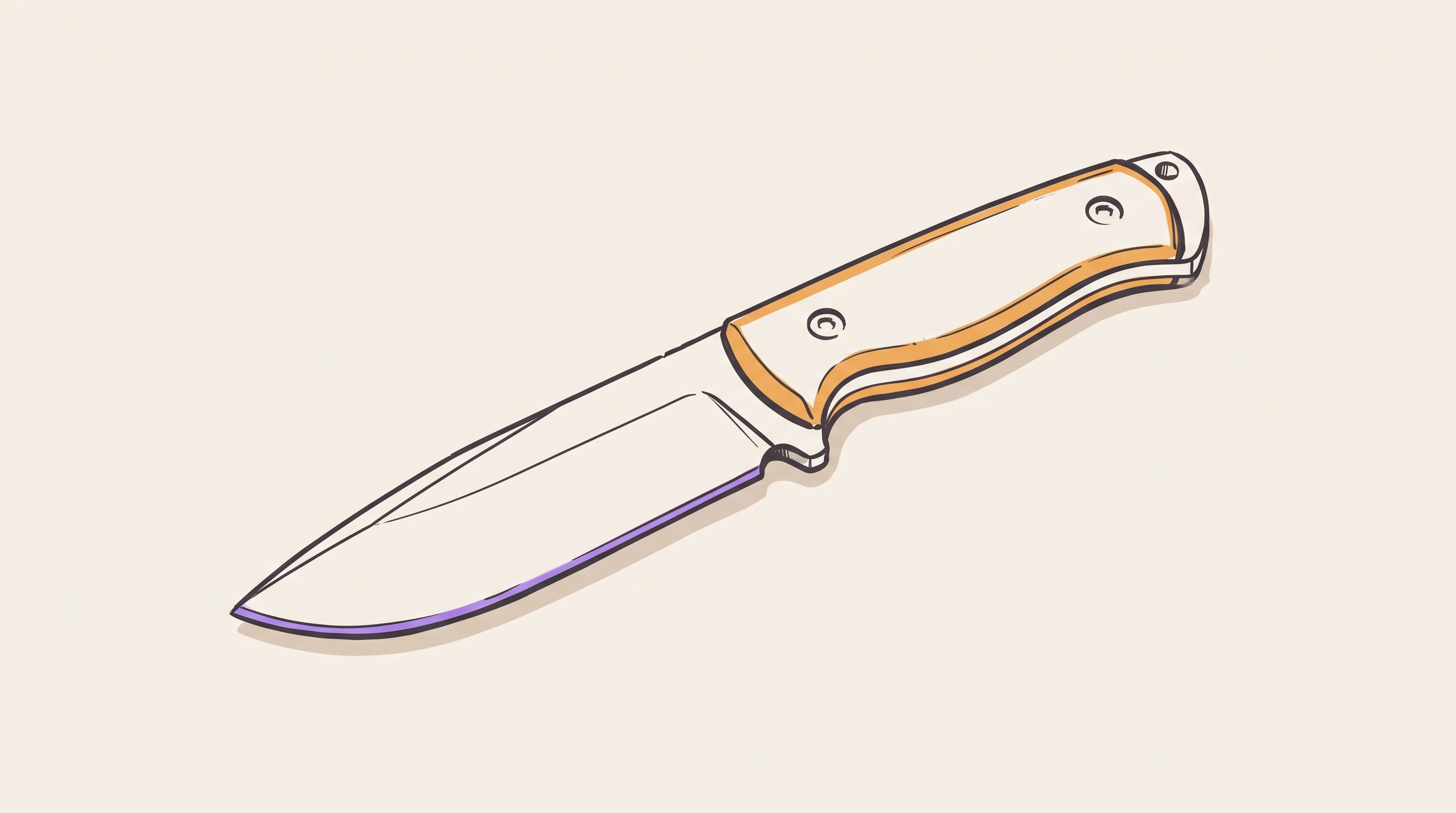
Knife blades differ in more than shape and steel. Grind, the cross-section profile ground into edge, drives how blade cuts, how easy sharpen, and how well edge holds up to different tasks.
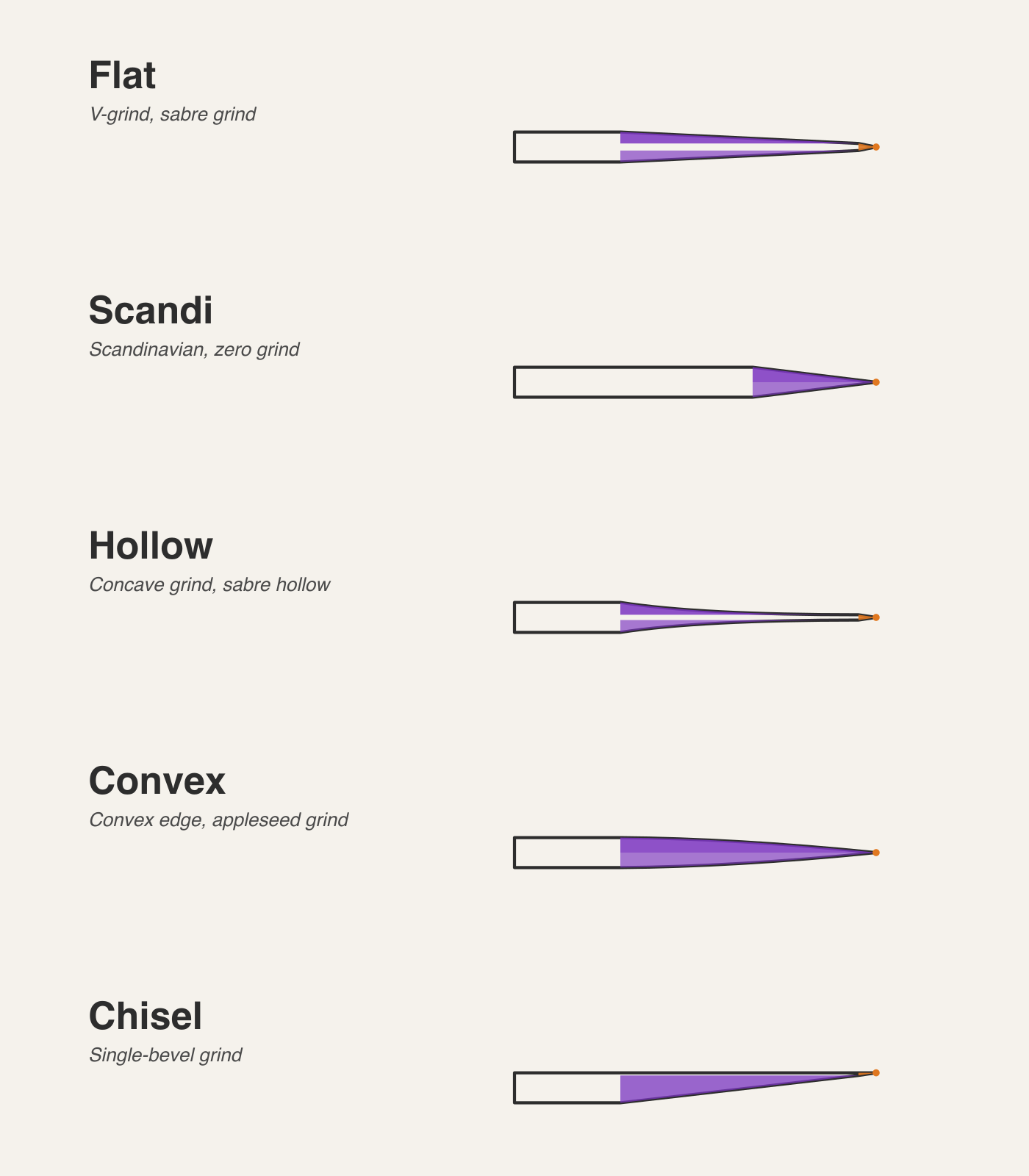
Flat Grind
Blade tapers straight from spine to edge, no secondary bevel curve. Simple, strong, easy sharpen.
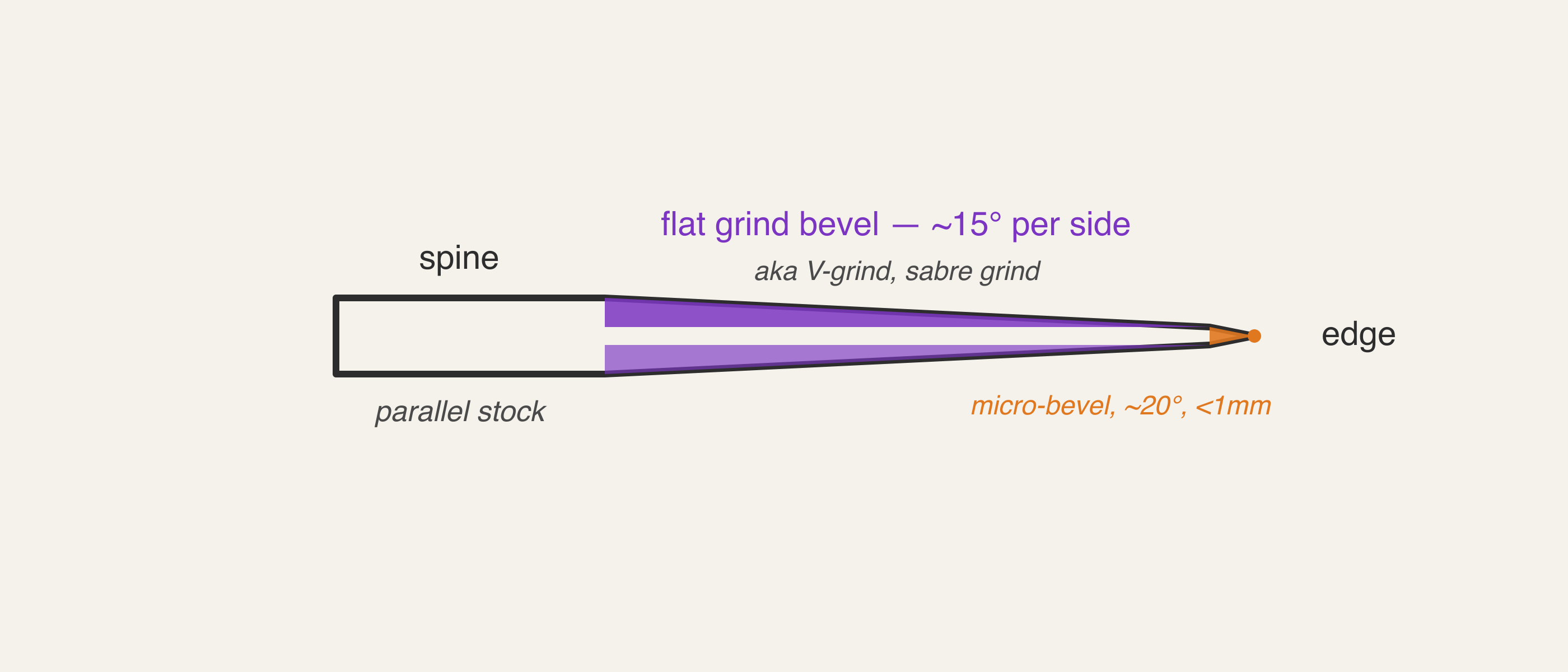
Main uses: general-purpose knives, kitchen knives, everyday carry.
Scandi (Scandinavian) Grind
Single bevel runs from partway down blade straight to edge, no secondary edge bevel. Very easy sharpen on flat stone, good control for wood work.
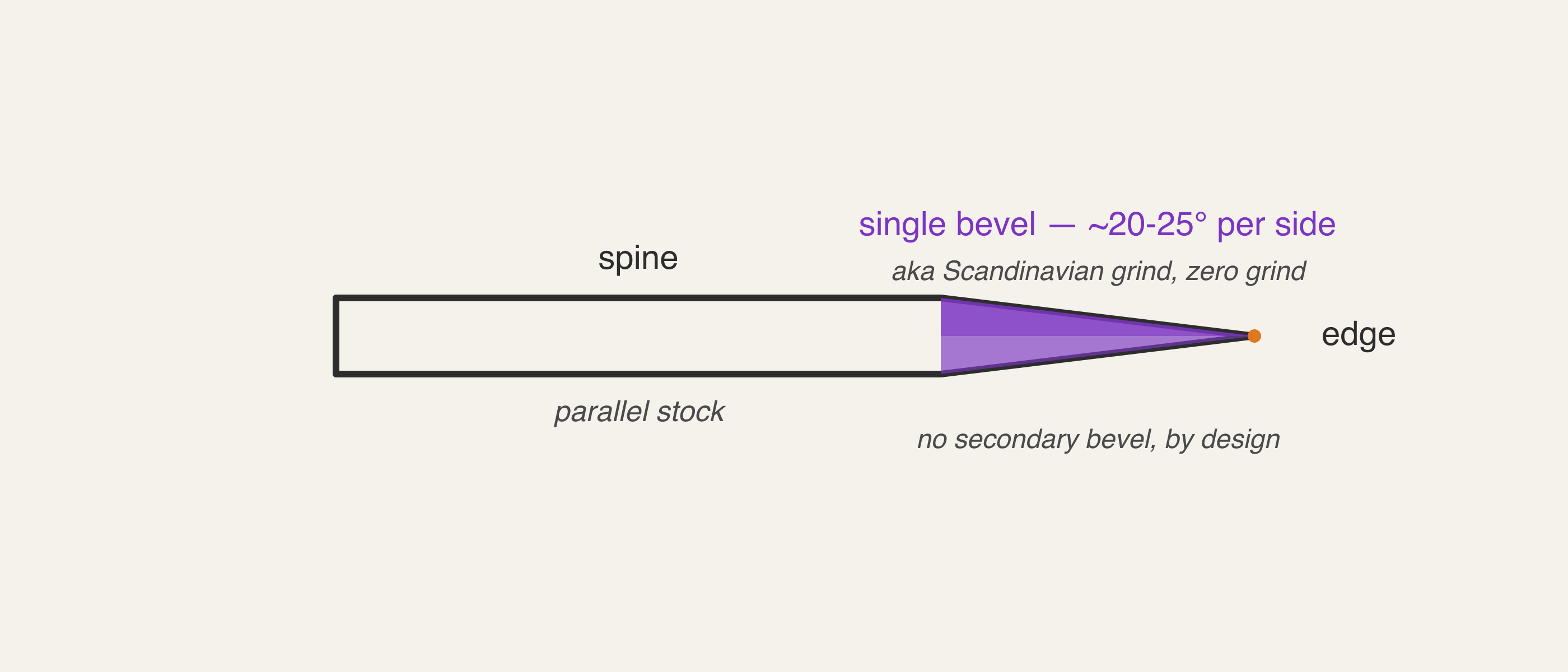
Main uses: bushcraft, whittling, carving, favoured for scouting/camp knives.
Hollow Grind
Concave curve ground into blade sides, edge thin and sharp. Sharpens to very fine edge, but weaker and edge rolls easier under hard use.
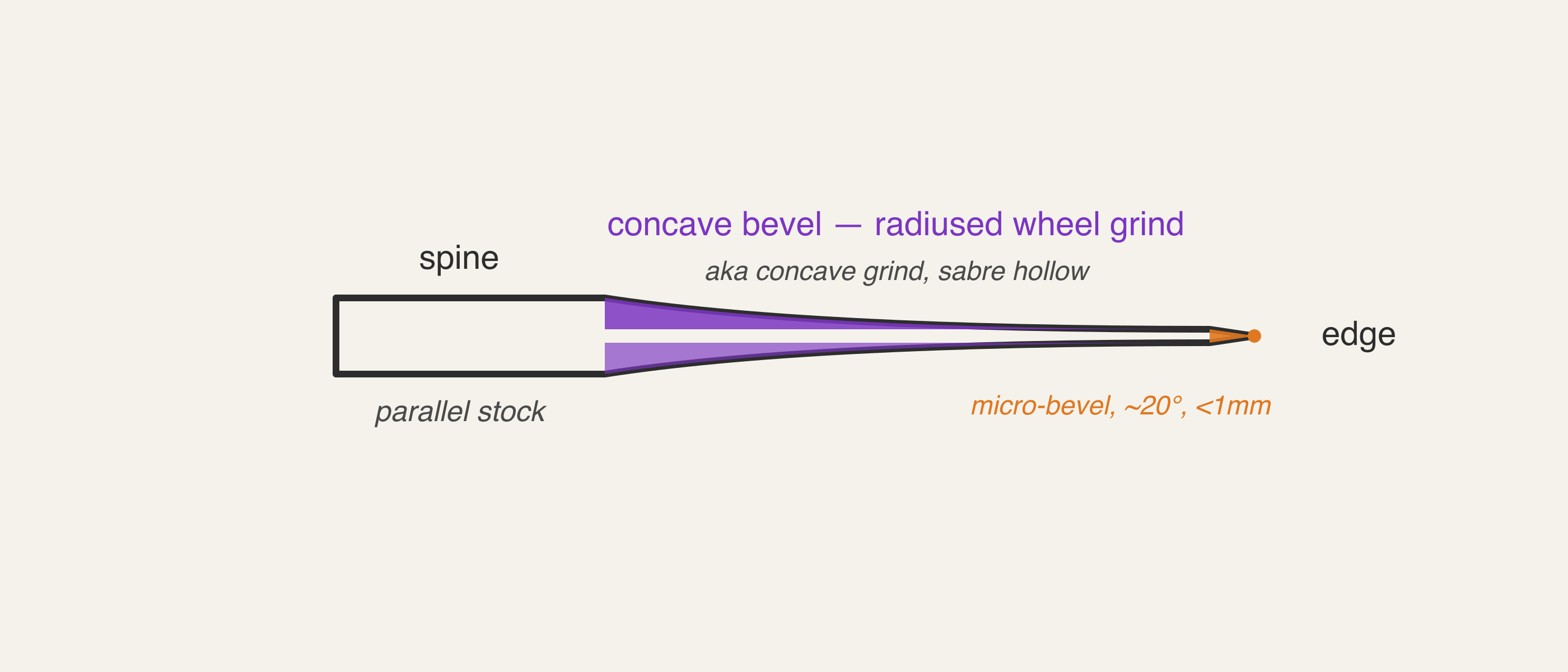
Main uses: straight razors, fillet knives, precision cutting tasks.
Convex Grind
Edge curves outward, opposite of hollow. Strong edge, good for chopping, holds up well to impact.
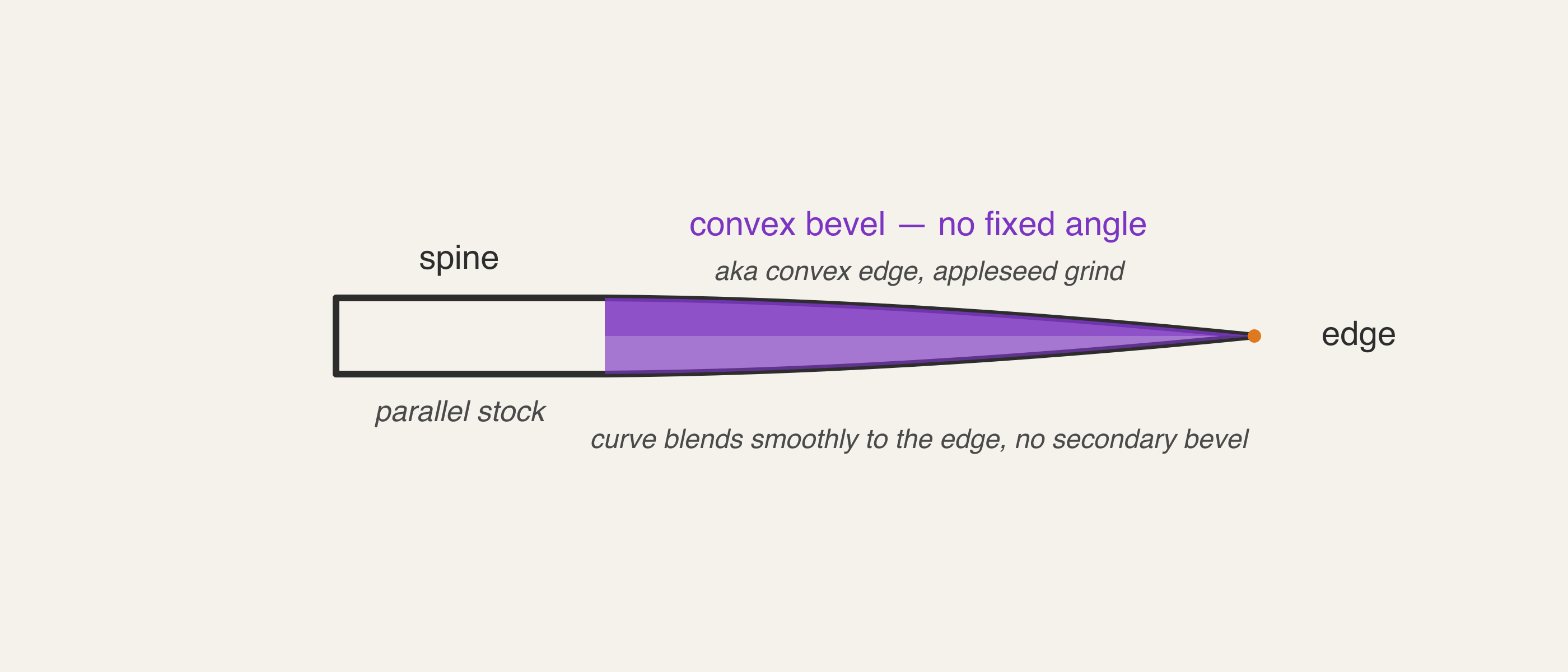
Main uses: axes, machetes, heavy-use survival knives.
Chisel Grind
Only one side ground, other stays flat. Very sharp, but asymmetric cut pulls to one side.
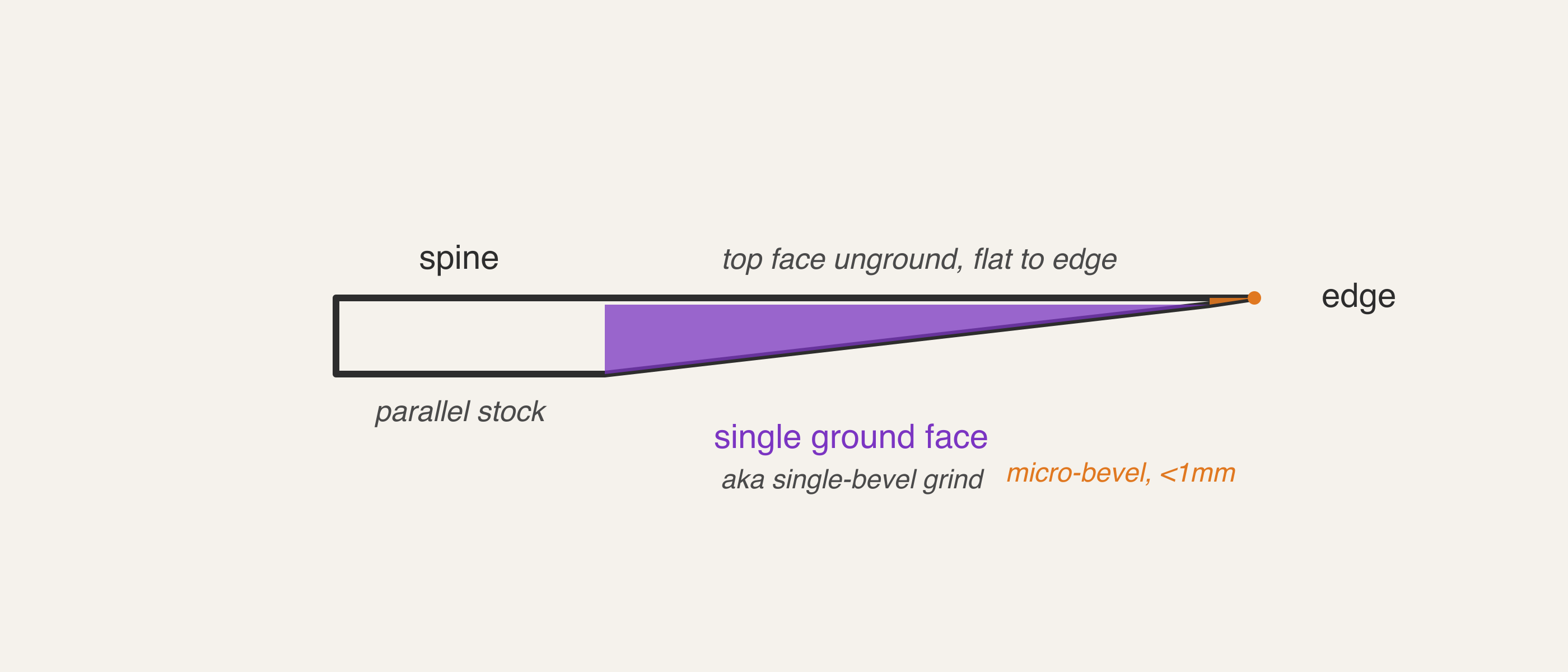
Main uses: some Japanese kitchen knives, specialist woodworking tools.
Choosing a Grind
For scouting and cub activities, scandi grind usually best starting point. Easy sharpen in field, good control for carving, safe predictable cut.